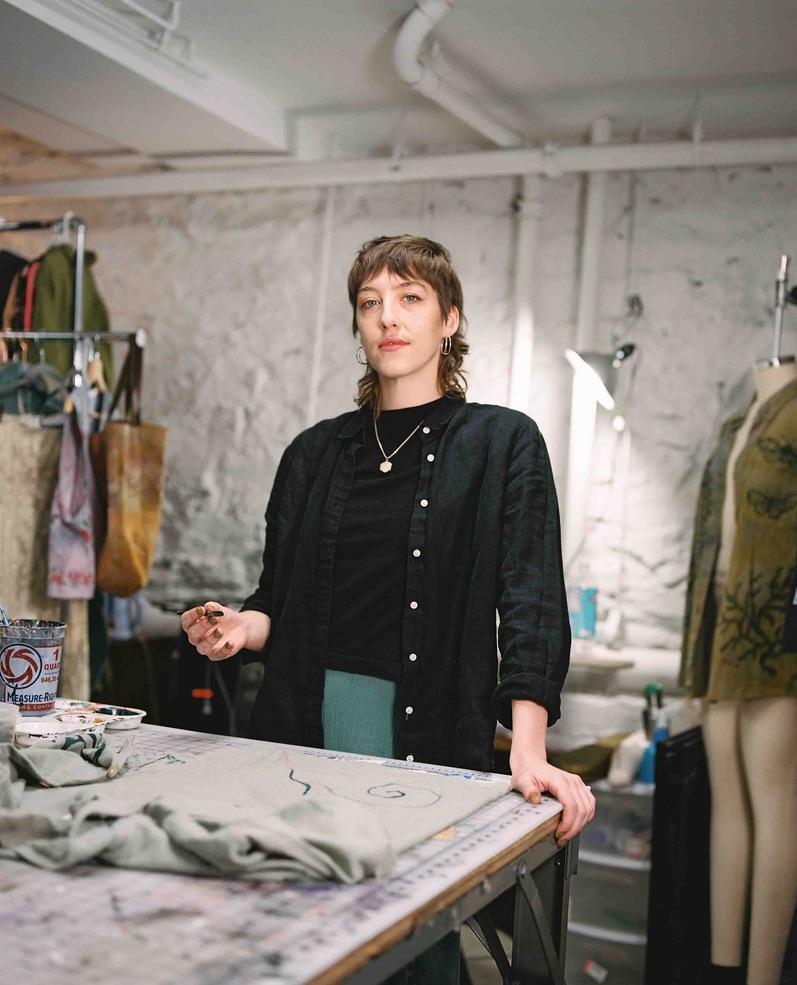
Alexis Krauss on her band Sleigh Bells, climbing in the Gunks, and giving back in the Hudson Valley
.jpg)
The lead singer of the noise-pop duo Sleigh Bells talks about climbing the Gunks, music in the Hudson Valley, and how lifelong locals and recent transplants can stay engaged with the needs of the community.
My senior year of college, the warm synths of MGMT and Sufjan's foray into electropop were starting to fade. That's when my friend Brad heard about this new band called Sleigh Bells in a glowing review from Pitchfork.
Before long, Treats was echoing through the dorm halls on repeat. Tell 'Em became a staple of the intramural sports warm-up playlist, and Rill Rill was giving my old laptop's speakers a workout.
So last November, imagine my surprise when I realized Sleigh Bells' lead singer, Alexis Krauss, had reposted a ConnectHV reel on Instagram—and that her whole feed was full of Hudson Valley content. She apparently lived within a couple of miles of my childhood home.
Jordan Koschei: How did you wind up in the Hudson Valley?
Alexis Krauss: Let me rewind. I grew up on the Jersey Shore, moved to New York City for college, and then stayed — bounced around Brooklyn for a little over a decade. I had a dog named Riz, and I wanted to get her out of the city. I was on this waterfall quest — just trying to find waterfalls. I think we went up to Saugerties one day, but then I found Minnewaska State Park, and that was it. I fell in love.
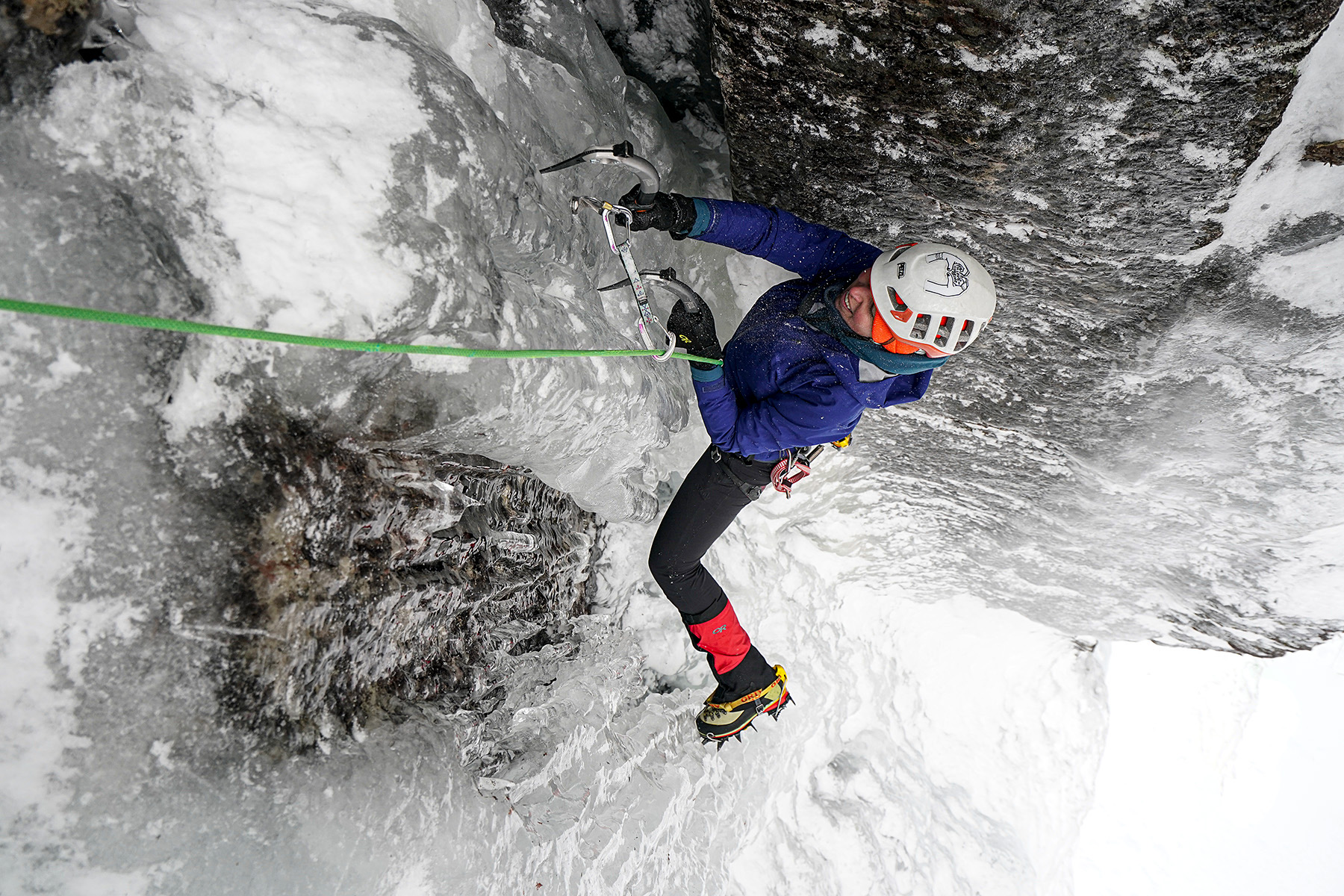
What started as me trying to get my dog into the woods — and also get myself into the woods — turned into this obsession with hiking, then scrambling, then rock climbing. I started indoors, then had friends who took me outdoors. When I found out about the Gunks, I just rapidly went down that path.
In 2017, I decided to relocate from Brooklyn to the mountains. My mom and I bought a home in Big Indian, right outside of Phoenicia. Then I met my now-husband rock climbing in the Gunks. He had a house in Gardiner, and I moved in with him in 2018. Been here since.
JK: Had you done any rock climbing before?
AK: Nothing. I grew up near the beach — climbing trees and being outside, loving animals and plants — but my family didn't do outdoor recreation. We didn't hike, didn't backpack, didn't camp. We just didn't have the resources or know about any of those things.
Then a climbing gym opened in Long Island City, which was a bike ride from me. My best friend started climbing in the Bay Area and turned me on to it. These weird little puzzle pieces started to fall into place. And when I discovered there was world-class rock climbing in the Gunks, I was like — I can drive from my apartment in Brooklyn and go rock climbing? Get the fuck out of here.
JK: No one expects upstate New York to have excellent rock climbing.
AK: No. And it's fascinating how climbing just kind of took over my life.
JK: Tell me about your involvement in the climbing community here.
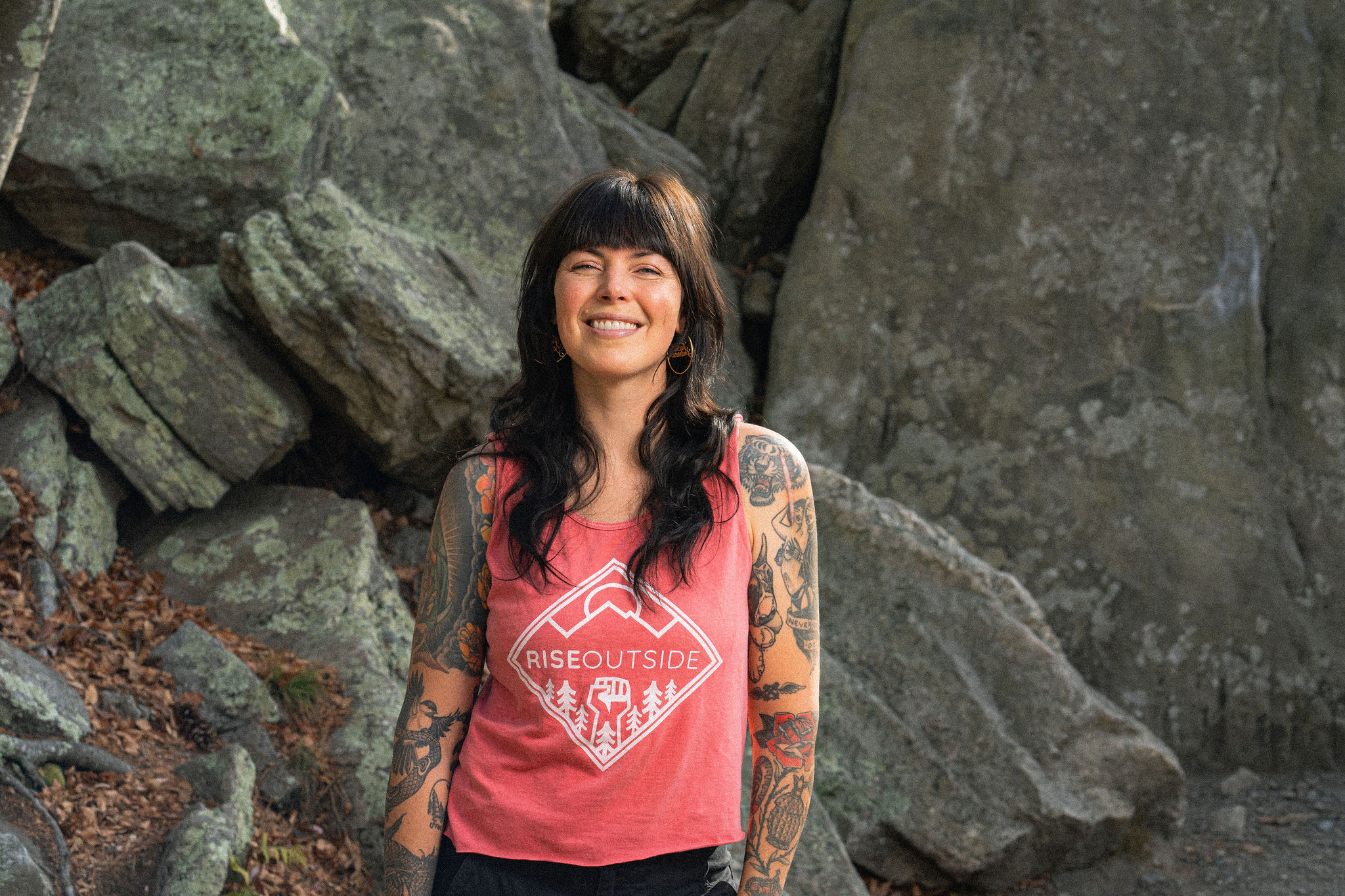
AK: I have a background in education, specifically working with young people. When I fell in love with climbing, I got connected with the mentorship community pretty quickly. I was interested in sharing climbing with other women, and that turned into mentoring young women in New York City.
I co-founded an organization called Young Women Who Crush with two other women. We created a free indoor climbing program that culminated with outdoor climbing days in the Shawangunks — either Peterskill or the Trapps. We partnered with Mountain Skills, a guiding service that's been here a long time. Doug Ferguson is a local and kind of a staple of the climbing community.
As the program grew, we renamed it Kinship Climbing Collective, and something became obvious: we were spending all year cultivating a community of young women and queer young people, and then going out with climbing guides who were very white, very male. We were like — how do we build a more diverse guide community? How do we have the people working with our young people all year actually represented as the guides?
So I decided to become a guide myself. I'd been climbing for about three years and had fallen in love with trad climbing, which is the style we have here in the Gunks. I'm by no means a really strong climber, but I was becoming proficient and confident. I took the single pitch assessment through the American Mountain Guides Association, passed the exam, and started guiding.
From there, I built a team of like-minded folks who wanted to see more diversity in guiding and were interested in providing programming for underrepresented communities — folks who had barriers to access because of transportation, gear, or cost.
We were doing that work a little haphazardly at first, but eventually we formed Rise Outside, a nonprofit guide service — really the first one operating in the Gunks. We have a permit with the Mohonk Preserve, we run programming in the Peter’s Kill section of Minnewaska, and we've been operational since 2020. We just finished a fantastic year. We partner with Rock and Snow, we offer a scholarship every year, and we provide free and low-cost programming alongside private guiding.
It's turned into this whole monster — in the most affectionate way possible. I've been guiding for seven years now. Climbing, for me, is a way to connect to nature and land and myself. My husband is a climber too — he's a photographer, mostly a climbing photographer. It's just completely interwoven into our lives.
JK: There's this other part of your life, which is your music. What has it been like making music up here instead of in Brooklyn?
AK: When I moved in 2017, Derek — my bandmate — and I had been working as a band for about eight years. We were established in our creative process. The fact that I was working as a musician is what enabled the move — I wasn't going into an office five days a week. Derek would take the Trailways bus up, which conveniently stops in Big Indian, just get dropped off on the corner of Route 28. We wrote and recorded an entire album at my mom's house in the Catskills.
The great thing about this area is the proximity to the city. It's easy enough to get down there for label meetings and music-business things. After we made that album, Derek decided to relocate too — he moved to Kingston about six years ago. So we're both Hudson Valley-based now. We're currently working on a new album. I'm over there one to two days a week, writing and recording.
It's benefited us both. We live in houses. We don't share walls with neighbors. Derek can blast music 24/7. The creative process hasn't really changed — nothing's been taken away. If anything, we both live healthier lives up here.
One thing we've been terrible at is playing a Hudson Valley show. We're really going to prioritize that on our next touring cycle. The Hudson Valley gets the shaft because of New York City, but there are so many great venues up here now. We have no excuse.
JK: The Hudson Valley is such an odd place musically. We get the shaft, but then sometimes Bob Dylan plays Kingston.
AK: Right. And lately I see a lot of big artists coming through Arrowood Farms. It makes sense — especially post-COVID, with so many creatives moving up here. But hopefully we'll play a real show here soon.
JK: If there was one thing you could change about the Hudson Valley as a creative scene, what would it be?
AK: More public transportation. Coming from a city where I spent so many years commuting and walking — one of the beautiful things about New York City is that with very little money, you can go so many places. So many shows and cultural events. It's harder to do here. Things are further away. Having a car, driving, affording that — it's tough. Distance is a challenge in itself, but the lack of easy access to the urban areas where we have venues and culture — it's just hard to get around.
JK: If someone in the Hudson Valley wants to try climbing for the first time, how should they start?
AK: Go to a gym, learn the movement, and then consider transitioning outdoors. We have the Gravity Vault in Poughkeepsie, Mustangs in Kingston — run by my buddy Steve Bittner — and BC’s in New Paltz. If it's the middle of winter and you're stoked to try climbing, go to one of those three. Mustangs and BC’s are bouldering gyms, so no rope climbing, but it's a great way to learn and meet people. The bouldering community here is fantastic. And bouldering is the most affordable way to start — all you need is a chalk bag and climbing shoes.
But here's what's cool and kind of unique about this area: we have world-class rock climbing right in our backyard, all throughout the Shawangunk Ridge. You can hire a guide and get climbing outside before you even step in a gym. Rise Outside is our nonprofit guide service. There's also Gunks Guides, Alpine Endeavors, and Mountain Skills. Seek safe, qualified instruction. It's always a good idea to hire a guide — to make sure you're not going to die.
JK: Always good. What are your favorite spots for coffee or a drink?
AK: I'm closest to New Paltz, so — Dry Fly for coffee, Lagusta's for seasonal drinks, Little Loaf for pastries and breakfast. And when I'm in Kingston, Camp Kingston.
JK: Was there anything you wish I'd asked?
AK: I really appreciated your post about the SNAP cuts and the local organizations working on food insecurity. I just started delivering again for Kingston Emergency Food Collaborative — I'd worked with them during COVID, and it was great to reconnect with them.
I don't want to make a generalization about the artist-and-musician type who comes up here from Brooklyn, because stereotypes are dumb — but they are rooted in some truth. What I've noticed is that there can be a bubble. People come up here and stay pretty isolated in their communities. If your world is music, if your world is rock climbing, if your world is whatever — unless you have kids and you're branching out into the public school system, really connecting, it can be isolating. And as a result, people don't spend as much time connecting with community-based organizations as I'd like to see.
There are a lot of people facing food insecurity in the Hudson Valley, and there's a lot of affluence here, so it gets looked over. We struggle with gentrification. Housing is a big issue. Rents in Kingston and other areas are skyrocketing. I would encourage people — especially those who are middle class or upper middle class — to give back. Get involved with Kingston Emergency Food Collaborative. Check out People's Place. See what your local food pantry situation is like.
Sometimes it can just be like, "Oh, the Hudson Valley — it's where people go for their weekend trips, they go hiking, they eat at the Phoenicia Diner, and everything's happy and wonderful." I love that about this area too — it's one of the reasons I came up here. But let's not forget about the needs of the community, especially if we're going to call this place home.
Never miss a story
Hudson Valley community news, fresh stories, and the occasional heads-up — straight to your inbox.
Thanks for subscribing!